Political campaign websites may be required to display a clear disclaimer identifying who paid for or authorized the site. Federal candidate committees must include a disclaimer on websites available to the public. State and local requirements vary, so candidates should confirm the exact wording and placement required in their jurisdiction.
A campaign website may also need a privacy policy or terms of use, particularly when it collects donations, email addresses, phone numbers, or visitor data. These policies serve different purposes and should not be confused with the campaign’s required attribution statement.
Political campaigns must use a disclaimer for any public communications or political advertisement. Disclaimer requirements also apply if you are a:
- Candidate
- Political committee
- Election or campaign committee
- Political party
- Political action committee providing independent expenditures
The Federal Election Commission (FEC) defines public communications as “paid or unpaid announcements to the general public, such as advertisements, speeches, and articles printed in a newspaper.”
Here are other types of communication where a political disclaimer is required:
- Broadcast, cable or television ads
- Billboards
- Newspaper or magazine
- Mass mail and email
- Phone bank calls
- Online advertising, including social media and banner ads
- Other public campaign communications
Ballot measure and independent expenditure advertisements often require higher scrutiny under disclaimer rules. This is because, unlike political parties or a campaign committee, the public may not fully be aware of the organizations sponsoring those communications.
Political Disclaimer Types for Online Use
Online advertising communications
Facebook and Google both require verification of a candidate and committee before they allowed to advertise on their respective platforms.
You must also provide disclosure language in order to run online political advertising. Google and Facebook, for example, both require authorization of who is responsible for the advertising in addition to actual disclaimers in the advertisement.
For display ads, like those used in IP targeting, political advertisement rules require a readable notice as to what organization or committee made the expenditure on the ad graphic itself. Ads will get rejected if the disclaimer is too small and unreadable. In addition, information must be provided that identifies who paid for the ad, including a physical address, website address and the committee treasurer information.

A political ad disclaimer example.
A persistent website footer is usually the most practical location because it places the disclaimer on the homepage, issue pages, donation pages, blog posts, and campaign landing pages. Do not limit the disclaimer to a separate legal page that visitors may never see.
Use ordinary readable text rather than placing the disclaimer within an image. Check its size and contrast on mobile devices, and make sure the committee name matches the name used in campaign filings.
| Situation | Federal example |
|---|---|
| Candidate committee pays for the website | “Paid for by the Smith for Congress Committee.” |
| Another organization pays with campaign authorization | Identify the payor and state that the candidate committee authorized it. |
| Independent group pays without authorization | Identify the payor and state that no candidate or candidate committee authorized it. |
These are federal examples, not universal wording for every race. State and local campaigns should use the exact committee name and language required by their election authority.
Political Website Disclaimers
For political campaign websites, there are three standard disclaimers. Not only do they help you comply with the law, but they also help protect you legally.
Besides the “Paid for” disclaimer on your website footer, you should include the following disclaimers:
Authorization Disclosure
The specific wording required varies but it is usually some variant of candidate committee authorization. For example, “Paid for and Authorized by [the candidate or political group]“. Adding that text to a political website is simple, and most campaigns place this information near the bottom of each web page.
Your site should also feature a contact page that includes a full address, name and information about the political committee or sponsoring organization.
Privacy Policy
Most people don’t read ‘legalese’, but a good privacy policy helps build trust, particularly with potential donors. It’s best to be restrictive with your privacy policy and promise not to sell or share visitor information with anyone. This section can also cover users under a particular age, typically age 13. The stronger your privacy policies, the better. Spell them out in a plain sentence or two, followed by more detailed information.
Terms of Use
Terms of use can address ownership of campaign content, acceptable use, third-party links, limitations of liability, and governing law. Whether a campaign needs separate terms depends on the site’s features and applicable law.
Your terms of use may cover a variety of situations. Your political campaign may want to address the following:
- Language that the site materials are provided ‘as-is’.
- Limitations: Limiting liability for any user damages from use of the site.
- Revisions: Disclaimer language that the material on the site may not be accurate, and that the organization accepts no liability for inaccurate information.
- Links: That you are not liable for any content on outside websites, and that there is no endorsement implied to outside content.
- Governing law: Of the appropriate state.
Political campaign websites may be required to display a clear disclaimer identifying who paid for or authorized the site. Federal candidate committees must include a disclaimer on websites available to the public. State and local requirements vary, so candidates should confirm the exact wording and placement required in their jurisdiction.
A campaign website may also need a privacy policy or terms of use, particularly when it collects donations, email addresses, phone numbers, or visitor data. These policies serve different purposes and should not be confused with the campaign’s required attribution statement.
Does a Political Campaign Website Need a Disclaimer?
Under federal rules, websites operated by political committees and available to the public must display a disclaimer. Certain mass emails and paid internet communications also require disclaimers. The Federal Election Commission explains that the notice must identify who paid for the communication and, when applicable, whether a candidate or candidate committee authorized it.
The disclaimer must be clear and conspicuous. It should not be difficult to read or placed where visitors are likely to overlook it. The FEC provides additional federal advertising and disclaimer guidance.
Federal requirements do not provide universal wording for every campaign. Candidates for state and local office should check with their state or local election authority because the required language, formatting, and placement may differ.
Federal Campaign Website Disclaimer Examples
| Situation | General federal format |
|---|---|
| Candidate committee pays for the website | Paid for by [full name of the candidate committee]. |
| Another person or organization pays with campaign authorization | Identify the payor and state that the candidate or candidate committee authorized the communication. |
| Independent group pays without campaign authorization | Identify the payor and state that the communication was not authorized by any candidate or candidate committee. Additional payor contact information may also be required. |
These are general federal formats, not language to copy without review. State and local campaigns should use the exact committee name and wording required by the appropriate election authority.
Use the Correct Committee Name
The name in the disclaimer should match the committee name used in campaign filings. A campaign slogan, logo treatment, or abbreviated name may not be an adequate substitute. The correct wording also depends on whether the candidate committee paid for the website, another organization paid with the campaign’s authorization, or an independent organization paid without authorization.
Where Should the Website Disclaimer Appear?
A persistent website footer is usually the most practical location because it places the disclaimer on the homepage, issue pages, donation pages, blog posts, and campaign landing pages. Do not limit the disclaimer to a separate legal page that visitors may never see.
Use ordinary readable text rather than placing the disclaimer only within an image. Check its size and contrast on mobile devices, and make sure it remains visible on landing pages that use a simplified layout.
Your site should also have a contact page that identifies the political committee or sponsoring organization and provides an appropriate way to make contact. However, a contact page should not be used as a substitute for a required site-wide disclaimer.
Online Advertising Communications
Paid online advertisements may be subject to requirements that go beyond the disclaimer displayed on the campaign website. Federal rules for internet public communications address text and graphic ads as well as audio and video advertising. State laws and advertising-platform policies may impose additional requirements.
For federal internet ads containing text or graphics, the FEC generally requires a written disclaimer that can be viewed without the user taking another action. The text must be readable and have reasonable contrast. An adapted disclaimer may be available when the full notice cannot fit because of limitations inherent in the advertising format. Campaigns should review the current rules before launching social media, banner, or other digital advertising.
A political ad disclaimer example.
Do not assume that a disclaimer accepted by an advertising platform necessarily satisfies every federal, state, or local requirement. Platform approval and legal compliance are separate questions.
Privacy Policy
Most people do not read legal language closely, but a clear privacy policy can help build trust, particularly with potential donors, volunteers, and subscribers. It should accurately explain what information the campaign collects, how that information is used, and which service providers may process it.
Depending on the site’s features, this may include information collected through:
- Donation forms and payment processors
- Email and text-message signup forms
- Volunteer and event-registration forms
- Cookies, analytics, and advertising tools
- Contact forms and surveys
Do not promise that visitor information will never be shared with anyone if vendors such as email services, payment processors, analytics platforms, or hosting providers process that data. The policy should reflect what the campaign actually does. A short plain-language summary can be followed by more detailed information.
Terms of Use
Terms of use can address ownership of campaign content, acceptable use, third-party links, limitations of liability, and governing law. Whether a campaign needs separate terms depends on the site’s features and applicable law.
A political campaign may want its terms to address:
- Content ownership: Who owns the text, photographs, videos, logos, and other campaign material.
- Acceptable use: Restrictions on misuse of the website, forms, or campaign materials.
- Third-party links: The campaign’s responsibility for content on websites it does not control.
- Limitations of liability: Any appropriate limits related to use of the website.
- Governing law: The jurisdiction that applies to the terms.
If you are unsure what to include, another political website may provide ideas about topics to address, but its policy should not simply be copied. A policy written for an online retailer, for example, may contain irrelevant language about product returns, shipping, or customer-service hours. A policy generator can provide a starting point, but the final language should reflect the campaign’s actual website, vendors, and data practices.
Campaign Website Disclaimer Checklist
- Confirm the campaign’s exact registered committee name.
- Determine who paid for and authorized the website or communication.
- Verify the required wording with the appropriate election authority.
- Place the disclaimer where it appears throughout the website.
- Use readable text with sufficient contrast on desktop and mobile devices.
- Check donation, email, text-message, and advertising pages for additional notices.
- Review the language whenever the committee name, payor, authorization status, or sponsoring organization changes.
This article provides general information and is not a substitute for advice about a campaign’s specific legal obligations. Candidates and committees should consult the appropriate election authority or a qualified attorney when they are uncertain about the rules that apply.
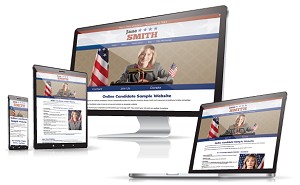
Online Candidate websites include places for you to easily add campaign disclaimers, privacy information, and terms of use, along with sample copy. Find out which website services are best for you.

Read More:



Questions for First-Time Political Candidates »